Red Dot

A CD player concept that makes physical media visible again.

Duration: 4 Weeks

Focus: Consumer Electronics

Tools: Solidworks, Keyshot

Form & component-layout concept

The starting point

The starting point

The starting point

I began with a childhood memory of listening to CDs. I wanted to bring that physical connection into a contemporary object: a visible disc, a simple body, and a stand that gives the player a presence in the room.
How can the disc, its movement, and the act of listening become part of the room?

How can the disc, its movement, and the act of listening become part of the room?

01 Inside the player

01 Inside the player

01 Inside the player

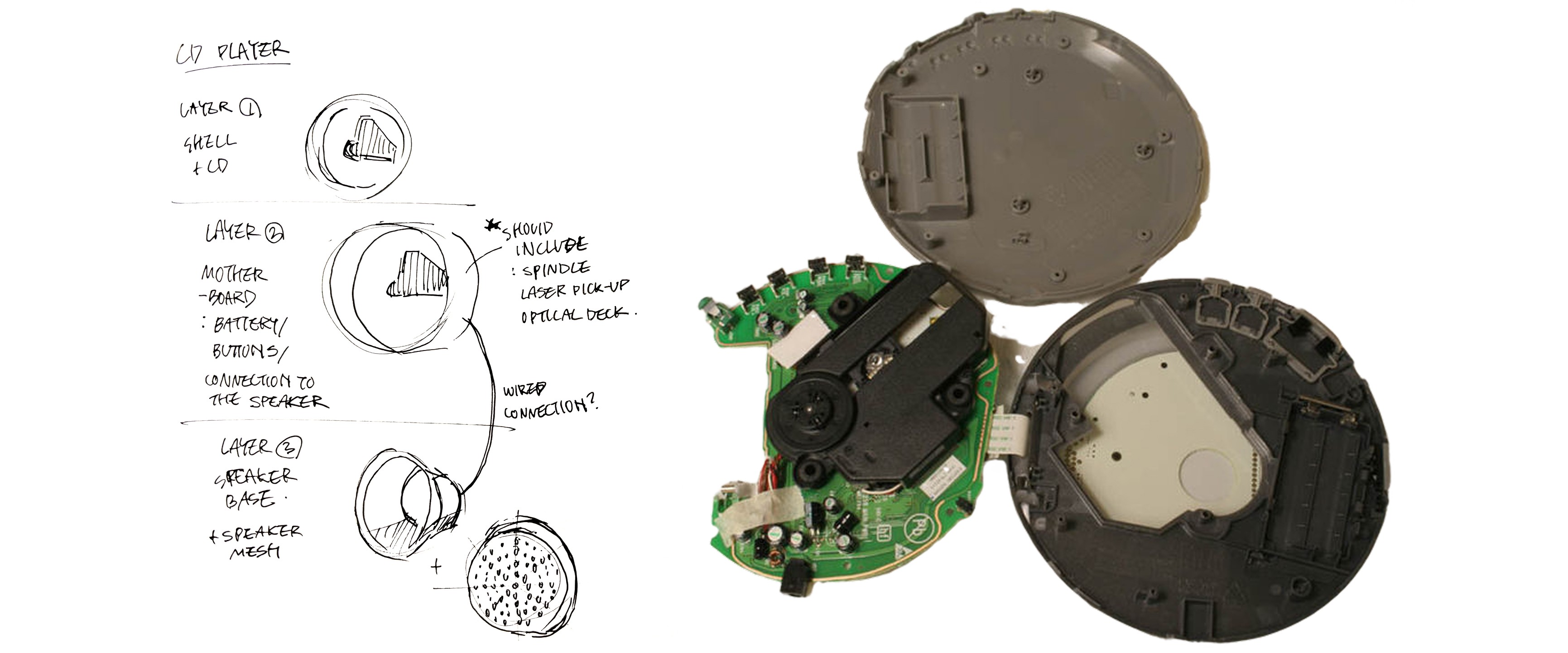
I studied existing CD players, record players, and cassette decks, then took apart a CD player to understand its internal arrangement. The teardown gave me a starting point for positioning the optical mechanism, circuit board, battery, and speaker within a circular enclosure. USB-C charging and a rechargeable lithium battery are proposed features of the redesign.

I studied existing CD players, record players, and cassette decks, then took apart a CD player to understand its internal arrangement. The teardown gave me a starting point for positioning the optical mechanism, circuit board, battery, and speaker within a circular enclosure. USB-C charging and a rechargeable lithium battery are proposed features of the redesign.

02 Form & posture

02 Form & posture

02 Form & posture

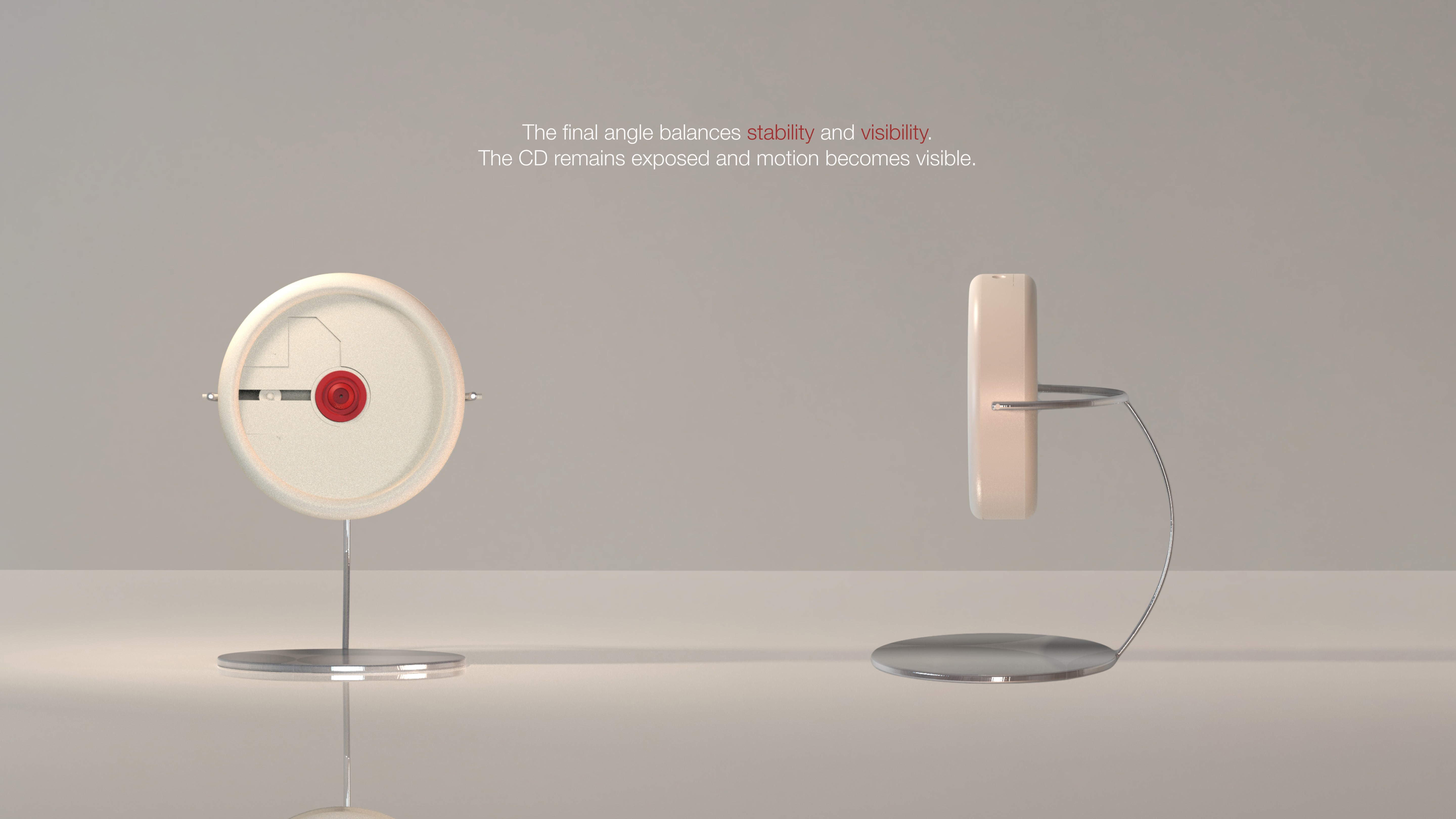
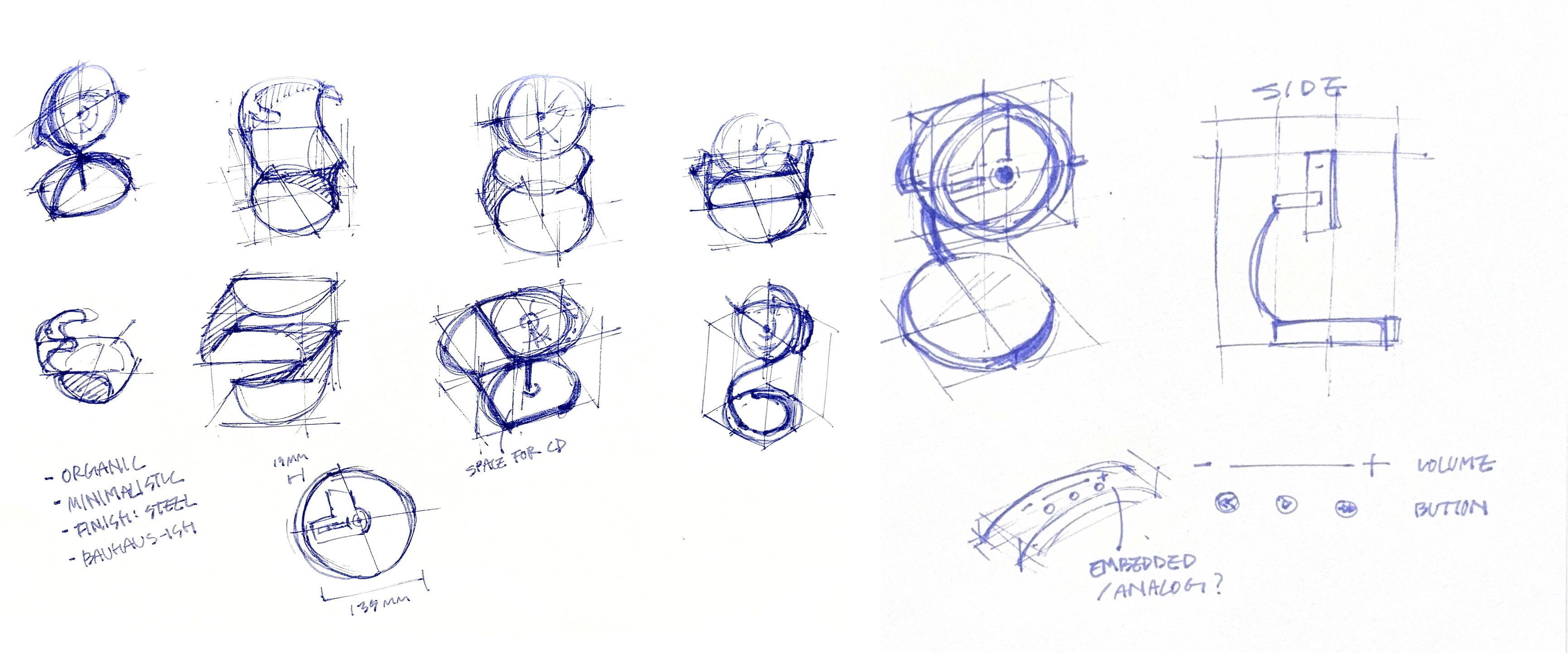
The stand became the main form exploration. My sketches compare ways to support and orient the circular body. In the selected direction, a curved support lifts the player above a round base, keeping the front face visually open. This establishes the object’s posture; a physical model is still needed to evaluate tipping, vibration, and access to the controls.

The stand became the main form exploration. My sketches compare ways to support and orient the circular body. In the selected direction, a curved support lifts the player above a round base, keeping the front face visually open. This establishes the object’s posture; a physical model is still needed to evaluate tipping, vibration, and access to the controls.

Selected form study. Stability is a design goal here, not a measured test result.

03 Component layout

03 Component layout

03 Component layout

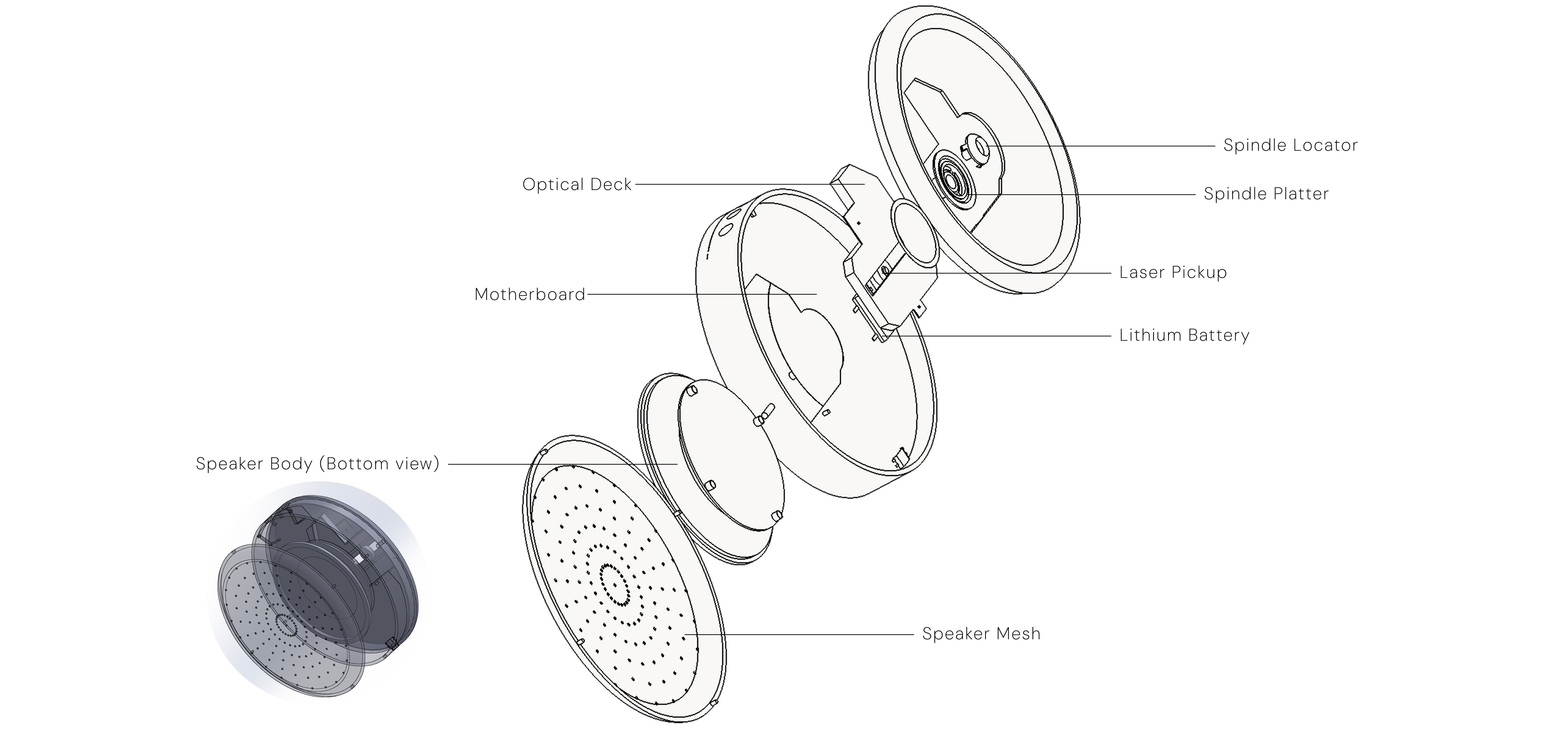
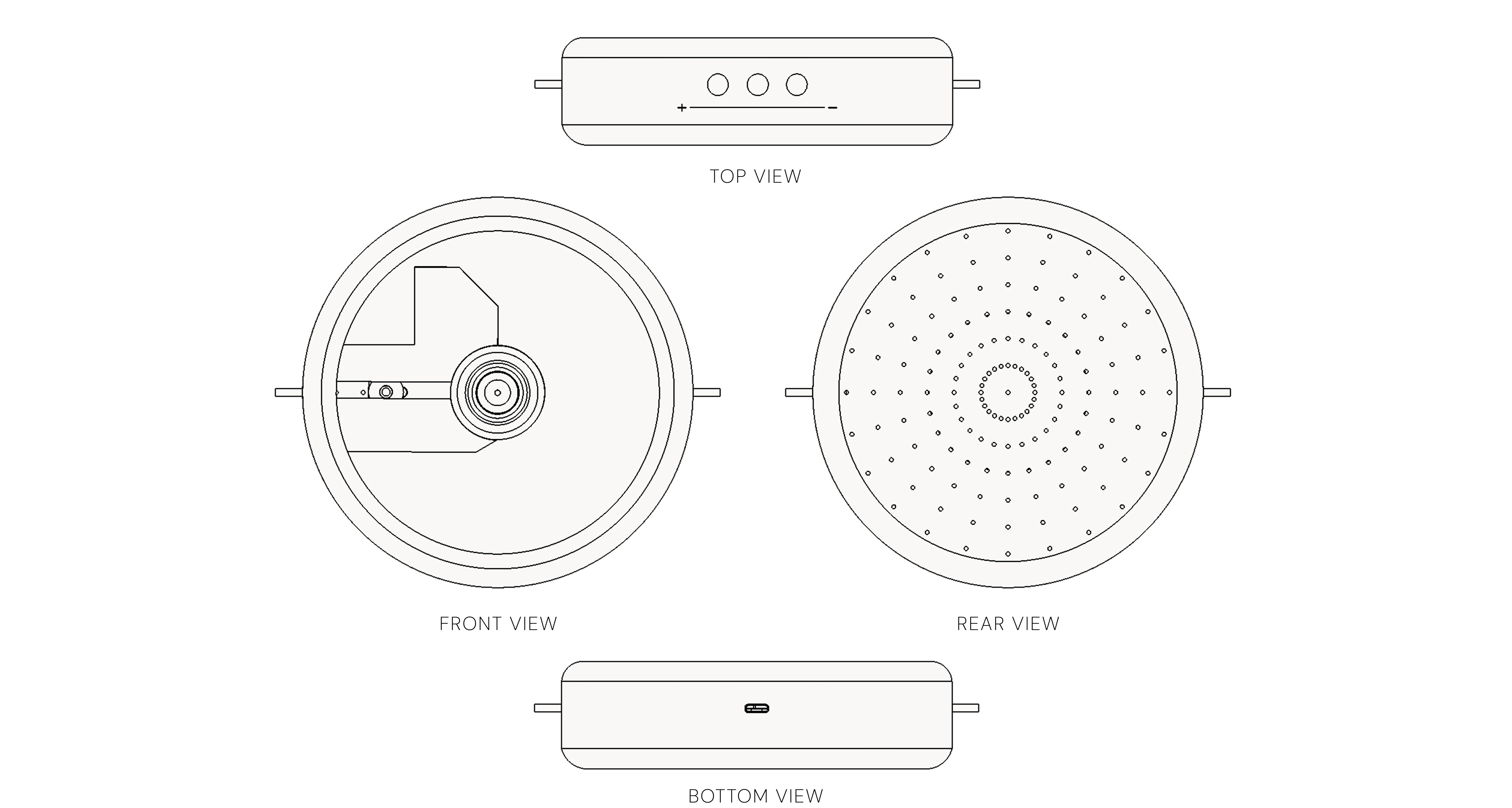
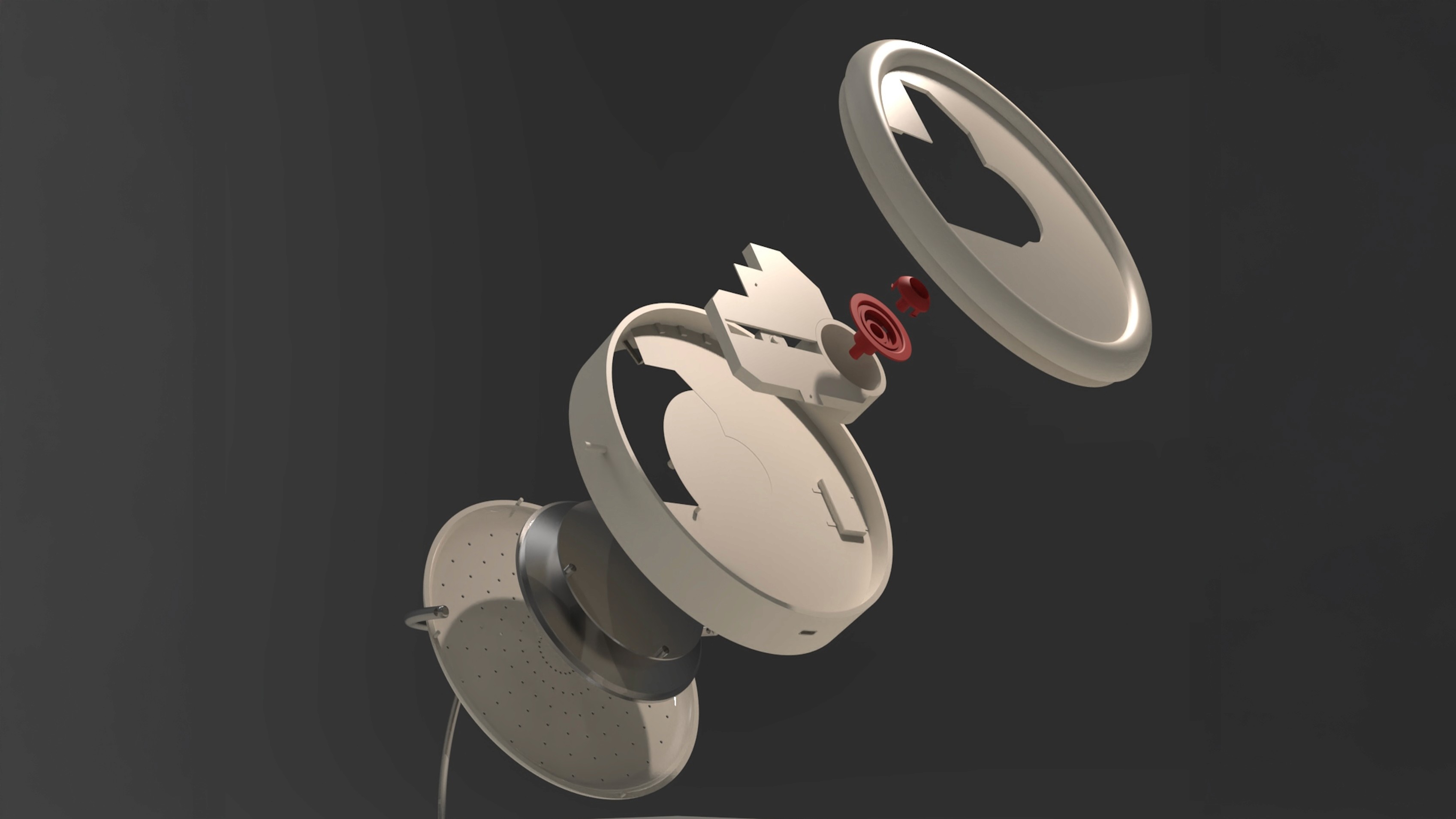
I translated the teardown into a proposed component layout. The exploded view shows how the enclosure relates to the optical mechanism, board, battery, and rear speaker area; the orthographic views describe the body and control placement. These drawings communicate packaging intent. Clearances, fastening, acoustics, and a working assembly remain to be validated.
04 Material & interaction

04 Material & interaction

04 Material & interaction

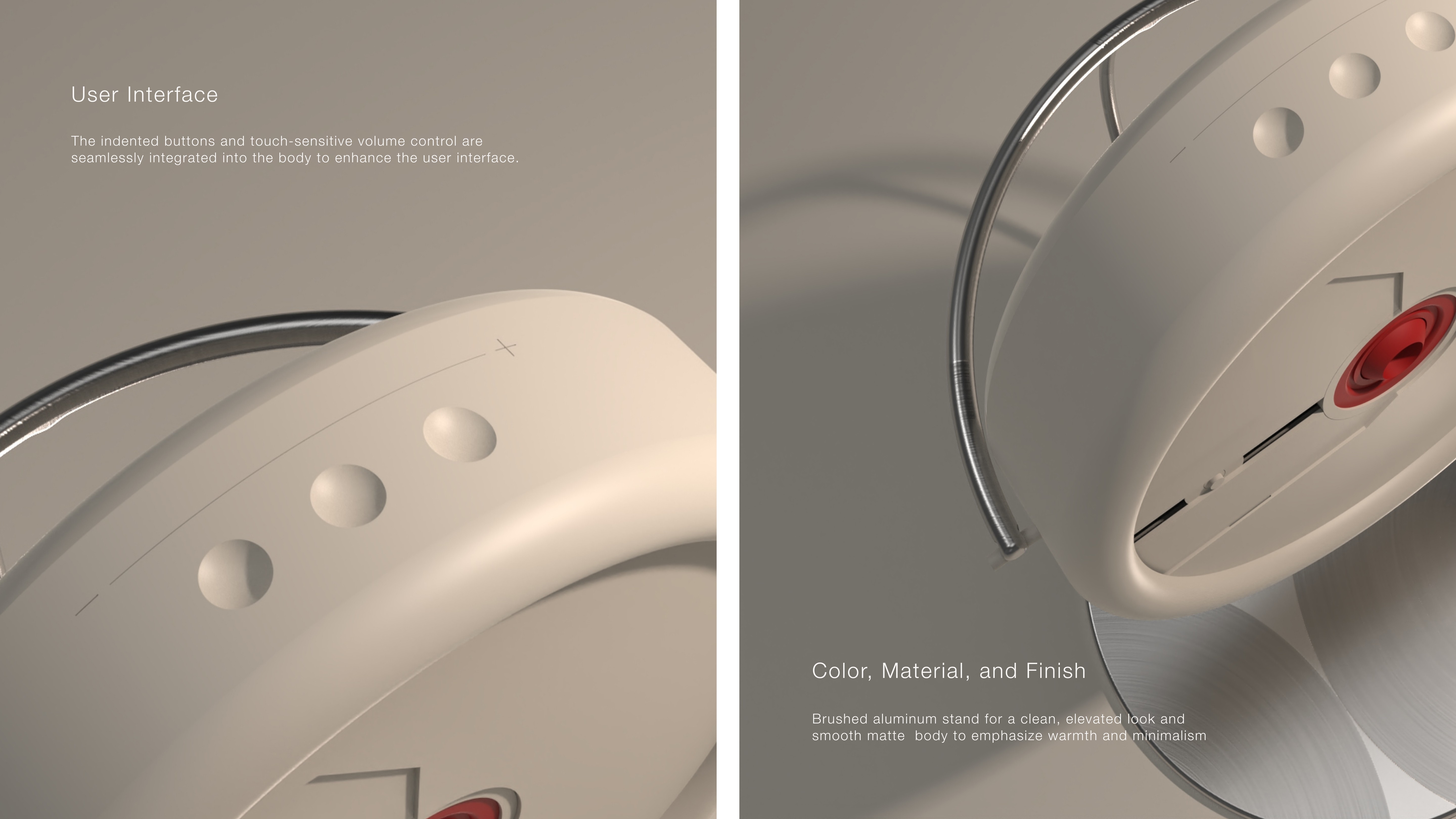
The proposed finish pairs a warm, matte body with brushed aluminum and a red spindle accent. Recessed buttons and a touch-sensitive volume strip keep the upper surface visually quiet. The renders explore this combination; control discoverability and feedback would need to be evaluated with a physical interaction model.
05 What I would test next

05 What I would test next

05 What I would test next

The four-week outcome brings together a visible disc, a sculptural stand, and a proposed internal layout. The next step is to test whether that visual direction works as a usable player.

Posture and stability — Build a weighted mock-up to check tipping during button presses, disc changes, and cable use.

Control clarity — Ask people to find playback and volume controls without explanation, then revise their placement and feedback.

Working assembly — Check component fit, fastening, speaker performance, and access for assembly and maintenance.

Next

Shelf in cherry wood, finished with polyacrylic.
Inspired by "Dot" joints.